


How it works
questhealth.com offers 150+ consumer-initiated Quest Diagnostics lab tests to empower you to have more control over your health journey. Choose from a variety of test types that best suit your needs.
 HSA/FSA Accepted
questhealth.com offers 150+ consumer-initiated Quest Diagnostics lab tests to empower you to have more control over your health journey. Choose from a variety of test types that best suit your needs.
If your body is not absorbing certain nutrients properly, your doctor may suggest you consider taking a supplement for that nutrient.
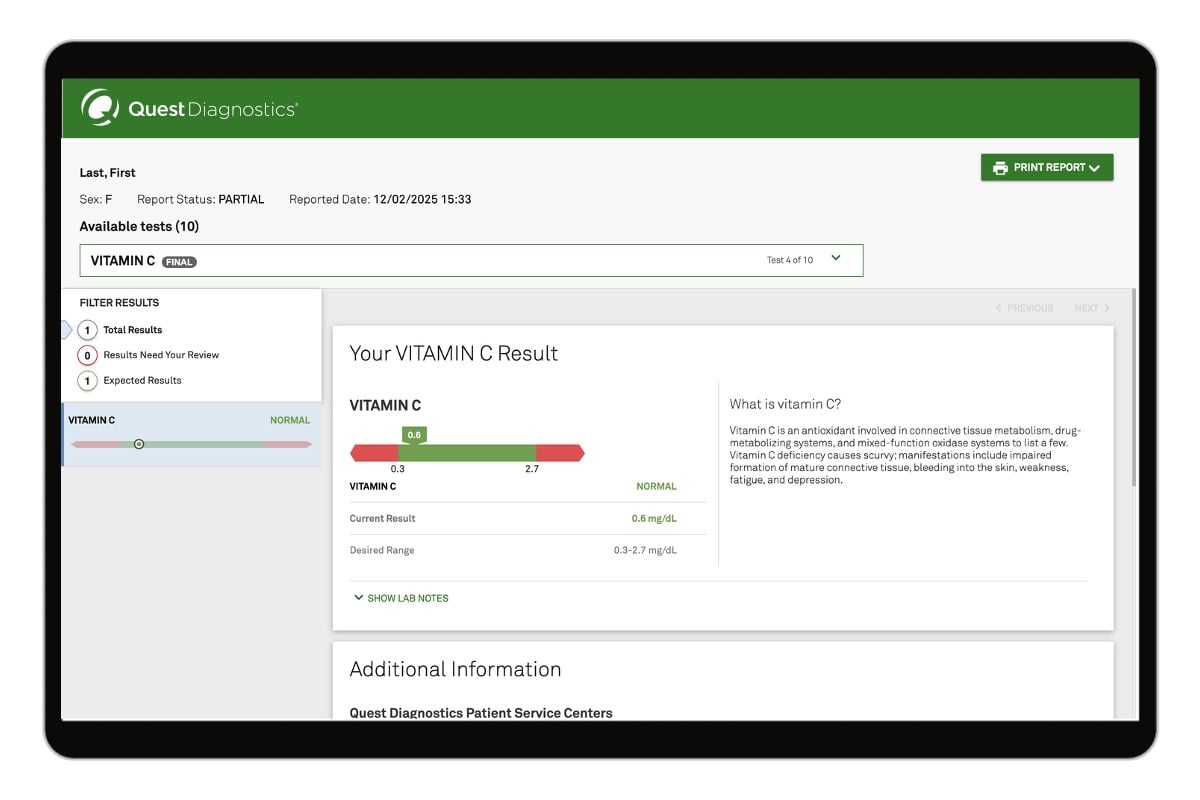
While it is unlikely to get too much of a nutrient if you are taking a supplement, getting too much, known as toxicity, is possible. Vitamin C is water-soluble, so excess is usually passed regularly in urine. However, very high doses from supplements may cause nausea, diarrhea, or stomach cramps. Always confirm a deficiency and discuss with your healthcare provider before increasing your supplemental intake.
Water-soluble and fat-soluble vitamins differ in how they are absorbed by the human body. A water-soluble vitamin dissolves in water and is easily absorbed by the body. Your body does not store these vitamins for long, so any extra will be eliminated in your urine. Because of this, it's important to consume them every day.
A fat-soluble vitamin dissolves in fats and oils and is absorbed with the fats you eat. Your body stores any extra in your liver or fatty tissues. Because of this, you don't need to consume them every day.
Tests purchased on questhealth.com are intended for individuals paying directly—we do not bill insurance, and purchases cannot be submitted for insurance reimbursement.
If your doctor ordered a lab test for you and you are looking to book an appointment for sample collection, you can schedule an appointment here https://appointment.questdiagnostics.com/as-home.
For other questions related to a lab test your doctor ordered for you, including billing and results, you can visit the main Quest Diagnostics site here https://www.questdiagnostics.com.


